
Dutch Public Transport for Effortless Day Trips
Amsterdam Central is humming, your camera is ready, and a windmill village or storybook canal town is calling. Dutch public transport can take you surprisingly far from the capital in a single day, but knowing which train, bus, ticket, and transfer to choose can turn a dream itinerary into a rushed one. A little planning gives you more time for tulip fields, harbor views, warm stroopwafels, and the small moments that make Holland feel magical.
How Dutch Public Transport Works for Visitors
The Netherlands is compact, connected, and built for getting around. Trains link Amsterdam with major cities and regional hubs, while buses, trams, metros, and ferries cover the spaces in between. For travelers based in Amsterdam, this makes independent day trips wonderfully possible – especially when you are visiting places with straightforward rail connections.
The key is to think of each mode of transport as part of the experience. A train ride can whisk you to Utrecht, Haarlem, Delft, or The Hague with little fuss. A local bus can carry you through green polders toward the windmills of Zaanse Schans or the fishing villages of Volendam and Marken. Ferries add a touch of adventure, particularly on Amsterdam’s waterfront.
Trains: Best for City-to-City Adventures
Dutch trains are generally frequent, clean, and easy to use. Amsterdam Central is the main departure point for many visitors, though Amsterdam Zuid, Sloterdijk, and Schiphol Airport may be more convenient depending on where you are staying and where you are headed.
For a classic urban day out, trains are often the smartest choice. Haarlem is close enough for a relaxed morning departure and a leisurely return. Utrecht offers canals, historic streets, and lively cafes. Delft brings blue-and-white pottery charm, while The Hague combines art, elegant neighborhoods, and the North Sea coast.
Check your platform shortly before departure, as it can change. Most trains do not require reserved seats, so simply board the correct class and find an open place. First class offers extra space, but second class is comfortable for most day travelers and provides excellent value.
Buses, Trams, and Metro: The Essential Connectors
Once you leave the rail network, buses often take center stage. They are particularly useful for countryside destinations, where the final stretch may lead past farms, dikes, and peaceful villages rather than through a train station.
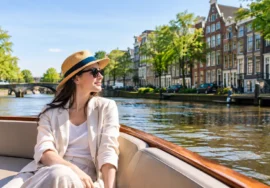
Amsterdam’s trams and metro are ideal for reaching museums, neighborhoods, and departure points around the city. City buses fill in the gaps, while free ferries from behind Amsterdam Central provide a lovely way to see the water without buying a ticket.
Allow a little breathing room when transferring. A connection that looks simple on a map can feel less simple when you are carrying luggage, traveling with children, or navigating an unfamiliar station for the first time.
Tickets for Dutch Public Transport
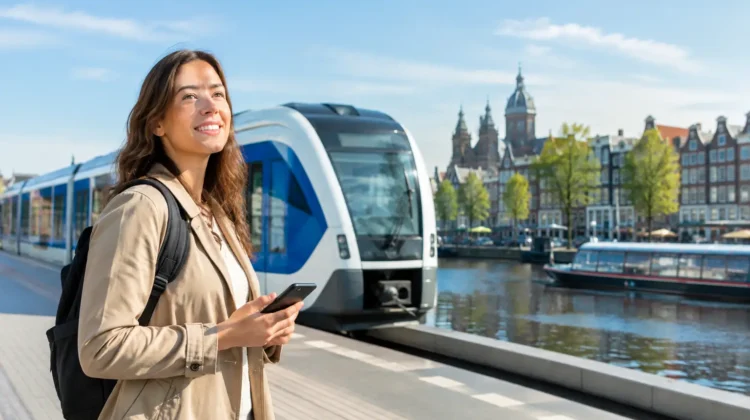
For many American visitors, the easiest way to pay is OVpay. You can check in and check out using a contactless debit or credit card, or a compatible phone or smartwatch. Use the same card or device at both ends of the journey. Switching from your physical card to your phone halfway through can cause the system to treat it as two different payment methods.
You will see card readers at train-station gates and on buses, trams, and metro platforms. Tap in at the start, then tap out when you arrive. This matters more than it may seem: forgetting to check out can result in a higher fare being charged.
If contactless payment is not your preference, consider a dedicated public transportation card or a travel pass. The best option depends on your plans. A visitor making several journeys within Amsterdam may benefit from a city transit pass, while travelers taking multiple longer train rides might compare regional or national ticket options before committing.
There is no single ticket that is perfect for every vacation. A pass can be worthwhile when you are moving constantly, but pay-as-you-go is often simpler for a relaxed itinerary with one major outing each day. Before purchasing any pass, check its zone coverage, its validity on trains versus buses, and whether airport travel is included.
Planning a Countryside Day Trip From Amsterdam
The Netherlands rewards travelers who start with a clear rhythm rather than a packed checklist. Pick one main destination, build in time for the journey, and leave room for the unexpected – a bakery window, a quiet canal, a photo stop where the light suddenly turns golden.
Zaanse Schans is a wonderful example. The famous windmill village is close to Amsterdam, but getting there independently can involve a train connection, a walk, and decisions about museum tickets once you arrive. It is entirely manageable, especially for confident travelers, yet it may not be how everyone wants to spend precious vacation time.
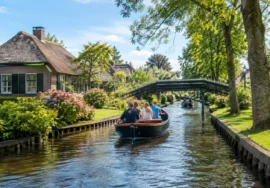
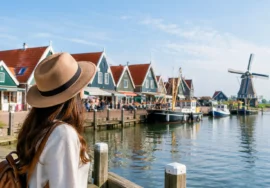
Volendam and Marken create a different kind of day. Their harbors, traditional houses, and waterfront restaurants are full of Dutch charm, but local bus schedules and ferry timing can shape the experience. Giethoorn is even more dependent on careful logistics. Its canals and thatched cottages feel like a hidden treasure, but it is farther away and requires more coordination than an Amsterdam museum visit.
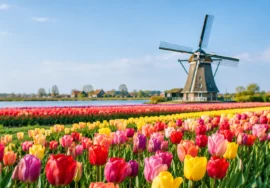
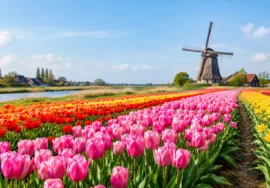
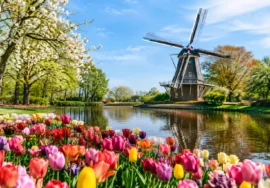
Keukenhof is another seasonal case. During tulip season, the gardens are spectacular, but they attract large crowds. Direct transport options can be available during the spring opening period, though departure points, routes, and schedules vary by season. Arriving early makes a meaningful difference, especially if you want photographs before the pathways become busy.
When a Guided Day Trip Is the Better Choice
Public transportation gives you independence, and for many travelers, that is part of the joy. You can linger in Haarlem, choose a restaurant on a whim, or turn a simple train ride into a whole afternoon of discovery. But flexibility has a trade-off: you are responsible for connections, timing, tickets, and finding your way once you arrive.
A curated tour becomes especially appealing when your day includes several countryside stops, limited seasonal access, or a destination that is not directly connected by train. Instead of watching the clock and wondering whether you are at the correct bus bay, you can settle into the journey and enjoy the view.
For couples, families, and friends with a short Amsterdam stay, that saved time can be worth far more than it first appears. A thoughtfully planned excursion lets the day unfold with more charm and less friction. Holland Experience creates these kinds of itineraries around beloved highlights such as windmills, fishing villages, tulip gardens, and Giethoorn, with the transport and pacing already considered.
Private touring offers another level of freedom. It is a beautiful fit for small groups who want to pause for photos, adjust the pace, or add a quieter village beyond the usual route. It costs more than public transportation, of course, but for a special occasion or a once-in-a-lifetime Holland visit, the comfort can shape the entire memory.
Small Details That Make Travel Easier
Start earlier than you think for popular attractions, particularly in spring and on weekends. Keep your phone charged, bring a portable battery if you rely on mobile tickets or payment, and save your accommodation address offline. Weather changes quickly, so carry a light rain layer even when the morning begins bright and sunny.
On buses, signal that you would like to get off by pressing the stop button before your destination. On trains, check the display inside the carriage as you approach each station. And when using a card to pay, pause for a moment after tapping to confirm that you have checked in or out successfully.
Most of all, resist the urge to see every corner of the country in one day. A slower afternoon beside a canal or a lingering look at a working windmill can be far more memorable than one extra transfer. Choose the journey that lets you enjoy Holland, not simply move through it.