How to Photograph Dutch Windmills Beautifully
The first time you photograph Dutch windmills, the temptation is to point your camera up, press the shutter, and move on. But these graceful giants deserve a little more patience. Give them the right light, a strong foreground, and enough space to breathe, and a simple countryside stop becomes one of the most memorable images of your Netherlands vacation.
Windmills are more than postcard icons. Their turning sails, weathered timber, waterways, and wide skies tell the story of a country shaped by wind and water. Whether you are traveling with a phone, a compact camera, or a full-frame setup, a few thoughtful choices can help you capture that unmistakable Dutch magic.
Choose the right windmill setting
Not every windmill scene creates the same photograph. Zaanse Schans, just outside Amsterdam, is ideal if you want classic wooden windmills beside traditional green houses, small bridges, and working workshops. It feels lively and storybook-like, especially for first-time visitors who want several iconic Dutch details in one frame.
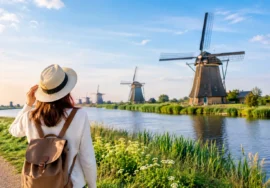
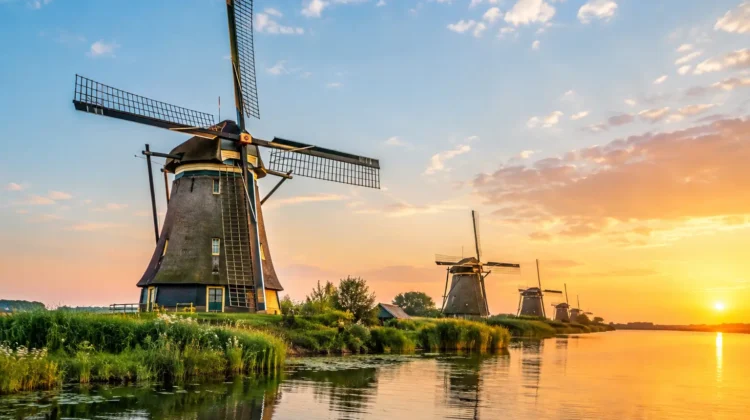
Kinderdijk offers a different mood. Its long line of historic mills beside open canals creates a grander, more spacious composition. This is where wide-angle images shine, particularly when the canal reflects the sky or a cyclist passes along the path. If your dream image is less village charm and more dramatic Dutch landscape, Kinderdijk may be your favorite.
There is a trade-off. Zaanse Schans is easy to pair with Volendam and other countryside highlights, but it can be busy. Kinderdijk gives you more open views, yet it calls for a little more time in your day. For travelers based in Amsterdam with a short vacation window, choosing the setting that matches your photo style is often smarter than trying to see everything.
Photograph Dutch windmills in the best light
Light decides whether a windmill photo feels ordinary or cinematic. Midday can work for clear, cheerful travel pictures, but the sun is high and shadows are strong. If photography is a priority, arrive early or stay later in the day. The first hour after sunrise and the final hour before sunset bring softer light, warmer color, and a more peaceful atmosphere.
Early morning is especially rewarding at popular locations. The paths are quieter, the water may be still enough for reflections, and you are less likely to have tour groups crossing your frame. In spring, you may also find mist hovering over the fields or canal – a fleeting detail that makes the scene feel wonderfully intimate.
Cloudy days should not send you back to Amsterdam. Dutch skies are part of the experience. A textured layer of clouds can add scale and drama above the sails, while soft overcast light preserves detail in dark wooden mills. If rain is passing through, wait a few minutes rather than rushing away. A break in the clouds can create an extraordinary patchwork of light across the landscape.
Find an angle with a sense of place
A windmill photographed straight on is beautiful, but the most shareable images usually reveal something about where it stands. Look for a canal, a field of reeds, a wooden fence, a bridge, or a row of traditional homes. These details lead the eye toward the mill and make the picture feel distinctly Dutch rather than like an isolated building.
At Zaanse Schans, step away from the busiest viewing point and look across the water. A low position near the canal edge can bring reflections into the foreground. At Kinderdijk, use the paths and waterways as leading lines, allowing several mills to fade into the distance. That repeating rhythm is one of the region’s great visual treasures.
Do not be afraid to turn around, either. Sometimes the strongest scene is behind you: a bicycle leaning near a fence, sheep in the meadow, or sunlight catching the rooflines of a nearby village. Windmills are the stars, but the supporting details create the romance.
Give the sails room to turn
Leave breathing room around the blades. Cropping a sail too tightly can make an otherwise lovely photo feel accidental, especially with a phone’s wide lens. Compose with a little extra sky and crop later if needed.
If the sails are moving, use that motion deliberately. A faster shutter speed freezes each blade sharply, which works well for crisp daytime travel photography. A slower shutter speed adds a gentle blur and brings the scene to life, but it is easier to achieve with a camera and a steady hand or tripod. On a phone, use a standard photo mode for a clean result rather than forcing a long exposure in bright daylight.
Make your phone photos feel more polished
You do not need professional equipment to create beautiful windmill photos. Modern phones handle broad Dutch landscapes remarkably well, provided you work with the light rather than against it. Tap on the mill to set focus and exposure, then slightly lower the brightness if the sky looks washed out. This helps preserve cloud detail and gives the wood a richer tone.
Use your phone’s grid to keep the horizon level. Canals and flat fields make a crooked horizon immediately noticeable. If the windmill sits in the center of the frame, that can look wonderfully formal and symmetrical. For a more relaxed, editorial feeling, place it toward one side and let the canal, path, or sky fill the remaining space.
Portrait mode is rarely the best choice for a landscape this expansive. A standard lens captures more of the setting. If your phone has an ultra-wide option, use it carefully. It can make a mill feel towering and dramatic, but stretching the edges too much can distort the blades and buildings.
Include people, but use them with purpose
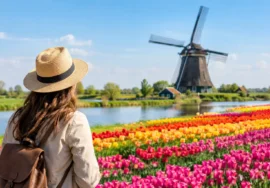
A person in a windmill photograph gives the structure scale. A partner walking along the path, a child pointing at the sails, or a cyclist crossing a bridge adds movement and turns a pretty view into a travel memory. It also makes the image feel more personal when you look back on it years later.
The key is not to treat people as an afterthought. Ask your companion to wear a color that stands out against the green grass or dark mill, then place them where the scene naturally leads the eye. A red jacket on a winding path can be far more effective than a posed smile directly in front of the entrance.
For couples, try a candid moment rather than looking at the camera. Walk hand in hand beside the canal, pause at a railing, or watch the sails together. The result feels less like a souvenir snapshot and more like a small scene from your own Dutch love story.
Plan around crowds and changing weather
The Netherlands is beautifully unpredictable. Bring a light rain layer, protect your camera or phone from showers, and wear shoes that handle damp paths. Wind is part of the landscape, so secure hats, straps, and loose scarves before setting up a shot near the water.
Crowds are another practical reality at famous windmill sites. Rather than fighting them, use timing and perspective. Arrive near opening time, photograph from across a canal, or frame upward so the mill and sky take center stage. A longer focal length can also compress the scene and crop out distractions, while a wider view may make people appear smaller within the landscape.
If you prefer a relaxed pace over navigation and schedules, a curated countryside excursion can leave more room for the images that matter. Holland Experience pairs Amsterdam departures with iconic villages and windmill scenery, so you can focus on the view instead of train connections and parking details.
Respect the landscape while you shoot
The most beautiful photograph is never worth stepping over a barrier, blocking a path, or entering private fields. Stay on marked routes, give cyclists room, and remember that many Dutch windmills are working heritage sites or private homes. A respectful distance often improves the composition anyway, because it lets you show the mill in its full setting.
Drones require special care. Rules vary by location, and protected landscapes, crowds, airspace restrictions, and privacy concerns can make flying impossible or inappropriate. Check local regulations before packing one, and do not assume a wide open field means you have permission to launch.
Before you leave, take one final frame without rushing. Watch the sails, listen for the water, and wait for a break in the clouds or a bicycle on the path. The photo you remember most may be the one that captures not only a Dutch windmill, but the quiet, enchanting moment you found beneath it.