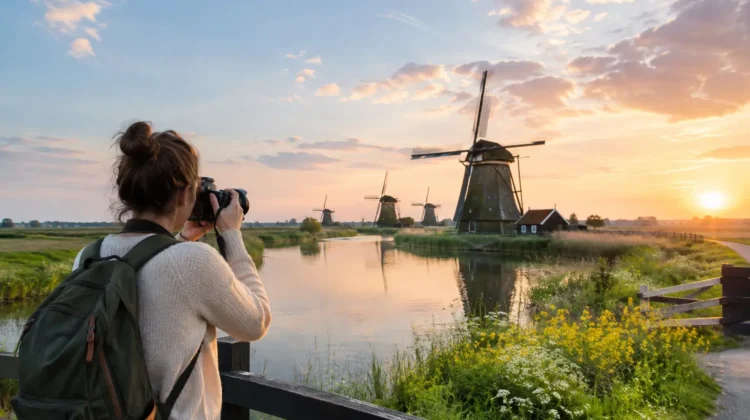
A Guide to Dutch Countryside Photography
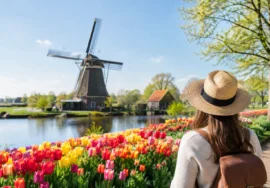
The Netherlands can look almost designed for a camera: a windmill turning above the water, a row of gabled homes reflected in a canal, and a field of tulips glowing beneath a wide sky. This guide to Dutch countryside photography will help you capture those signature scenes while finding the quieter details that make a day outside Amsterdam feel truly personal.
The secret is not simply arriving at the most famous viewpoint. Dutch landscapes reward patience, changing light, and a little room in your itinerary for an unexpected farm road, a passing bicycle, or the soft ripple of a boat on the water. Whether you travel with a phone, a compact camera, or a full kit, you can come home with images that feel as enchanting as the day itself.
Plan Your Dutch Countryside Photography Around Light
The Dutch countryside is famously flat, which means the sky is always part of the composition. It also means that light changes the entire scene quickly. A gray afternoon can make a windmill feel dramatic and historic; a clear early morning can turn the same landscape crisp, bright, and wonderfully calm.
For classic windmill, village, and canal images, aim for the first two hours after sunrise or the final two hours before sunset. The low sun adds warmth to brick buildings and wooden barns, while long shadows create depth across fields and paths. These quieter hours are especially valuable at popular places, where arriving early can make the difference between a peaceful scene and a frame filled with tour groups.
Do not write off overcast weather. Clouds soften contrast, which is ideal for portraits, close-ups of flowers, and colorful village façades. After rain, canals often become mirror-like and the sky can provide texture that a clear blue day simply cannot. Bring a small microfiber cloth for your lens and keep your camera accessible, because a break in the clouds may last only a few minutes.
Work With the Wide Dutch Sky
When the clouds are interesting, give them space. Place the horizon in the lower third of your frame and let the sky create drama above a windmill or tulip field. When the sky is pale and empty, do the opposite: lower your angle and fill the frame with flowers, grasses, water, or the distinctive architecture of a village.
A polarizing filter can deepen blue skies and reduce reflections on wet leaves, but use it gently. It can make a scene look unnaturally dark if pushed too far, especially with an ultra-wide lens. For phone photographers, tapping on the brightest area before taking the photo can help preserve detail in the clouds.
The Most Photogenic Countryside Stops
A well-planned day trip from Amsterdam can pair headline attractions with small visual moments in between. Each destination has its own rhythm, palette, and best subject.
Zaanse Schans: Windmills With Character
Zaanse Schans offers the windmill scene many travelers imagine before arriving in Holland. The green wooden houses, waterway, working mills, and old workshops create layers that are easy to photograph. Rather than standing directly in front of a mill, look for a composition that includes reeds, a fence, a footbridge, or a curve in the water. These foreground elements add a sense of place.
Try stepping back to show several mills in the distance, then move close for details: weathered wood, painted shutters, mill sails against the clouds, and reflections along the bank. If you are traveling with a companion, place them on a path or bridge for scale. A person in a bright coat can provide a beautiful point of color against the greens and browns of the historic village.
Volendam: Texture, Water, and Storybook Streets
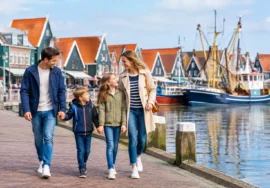
Volendam is less about wide-open fields and more about atmosphere. Photograph the harbor early, when boats sit quietly and the water catches the first light. Look beyond the waterfront, too. Narrow lanes, traditional homes, lace curtains, flower boxes, and fishing details tell a richer story than a single postcard view.
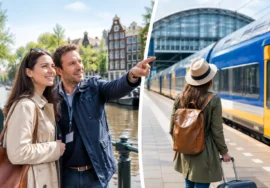
At midday, use the shaded side of buildings for portraits. The light is softer there, and the colorful village backdrops still feel lively. If you photograph people, keep the mood candid: someone admiring the harbor, sharing a snack, or strolling hand in hand often says more about the experience than a posed smile at the camera.
Giethoorn: Reflections and Gentle Movement
Giethoorn is a dream for photographers who love water, bridges, and charming details. Its canals provide natural leading lines, drawing the eye past thatched roofs and gardens toward the next curve in the village. A low viewpoint near the water can make a small wooden bridge appear more dramatic, while a higher bridge offers a clear view of boats gliding below.
Reflections are often the star here. Wait for a lull between passing boats, then photograph the house, trees, and sky mirrored in the canal. If there is a little breeze, embrace the movement instead of fighting it. A slower shutter speed can turn the water into soft texture, though this works best when you have a steady hand or small tripod.
Tulip Fields: Photograph With Respect
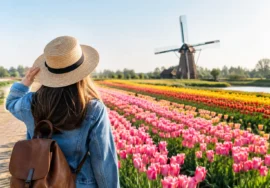
During spring, the flower fields around Keukenhof and the Bollenstreek create one of Europe’s most joyful color displays. Rows of tulips work beautifully as leading lines, especially when photographed from the edge of a field at a low angle. Look for repeating colors, a distant church tower, or a bicycle path that gives your image a clear focal point.
The important trade-off is access. Many working fields are private property, and stepping between flowers can damage crops and spoil the experience for everyone. Photograph from public roads, designated paths, and locations where entry is clearly permitted. Keukenhof’s gardens offer more freedom to compose close-ups and layered floral scenes, while roadside fields often provide the grandest ribbons of color.
A Practical Camera Kit That Keeps the Day Easy
You do not need to carry a heavy bag to make memorable countryside photos. Comfort matters, particularly on a full day of walking, village stops, and boat rides. A phone with a clean lens can produce wonderful images in good light. If you bring a camera, a versatile zoom and one fast lens are more useful than a collection of specialized gear.
Pack extra battery power, a memory card, a light rain cover, and a cloth for spray or drizzle. A small cross-body bag keeps your hands free for boarding boats and walking on uneven paths. If you use a tripod, choose a compact one and be considerate on narrow bridges or busy walkways.
For most scenes, shoot wide first to establish the landscape, then move in closer. A full tulip field is impressive, but so is a single flower with raindrops on its petals. A grand windmill deserves a wide frame, but the gears, wood grain, and sail shadows may become your favorite images later.
How to Make Your Photos Feel Less Like Postcards
The postcard shot is worth taking. You came to see the windmills and tulips, after all. But after you have captured it, spend five more minutes looking for the story around it.
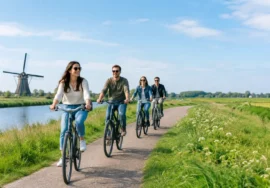
Watch for bicycles crossing a bridge, ducks leaving ripples on a canal, a local arranging flowers outside a home, or light falling through a café window. Frame through a gate, use a line of fence posts to lead toward a mill, or include a friend at the edge of the scene. These small choices create photographs that feel connected to your own journey rather than copied from a brochure.
It also helps to vary your pace. On a guided itinerary, use travel time between stops to review your images and notice what is missing. Perhaps you have many wide landscapes but no close details, or several village views but no people enjoying them. A curated day trip can remove the stress of navigation, leaving you free to focus on the moments that deserve your attention.
Edit for the Feeling You Remember
When you edit, resist the urge to make every sky intensely blue and every tulip impossibly saturated. The beauty of Holland often lives in softer tones: silvery water, shifting clouds, mossy greens, warm brick, and delicate spring color. Start with small adjustments to exposure, shadows, and warmth, then stop before the image loses its natural character.
Choose a handful of favorites from each stop instead of saving dozens of near-identical frames. One wide windmill scene, one quiet village detail, one joyful portrait, and one unexpected moment can tell the full story of a countryside day. Holland Experience can craft that kind of unhurried, photo-ready escape from Amsterdam, with the iconic sights and the breathing room to enjoy them.
Keep your camera close when the schedule says it is time to leave. Some of the loveliest Dutch countryside photographs happen from the bus window, beside a canal, or in the final golden light when the day’s best view appears without warning.